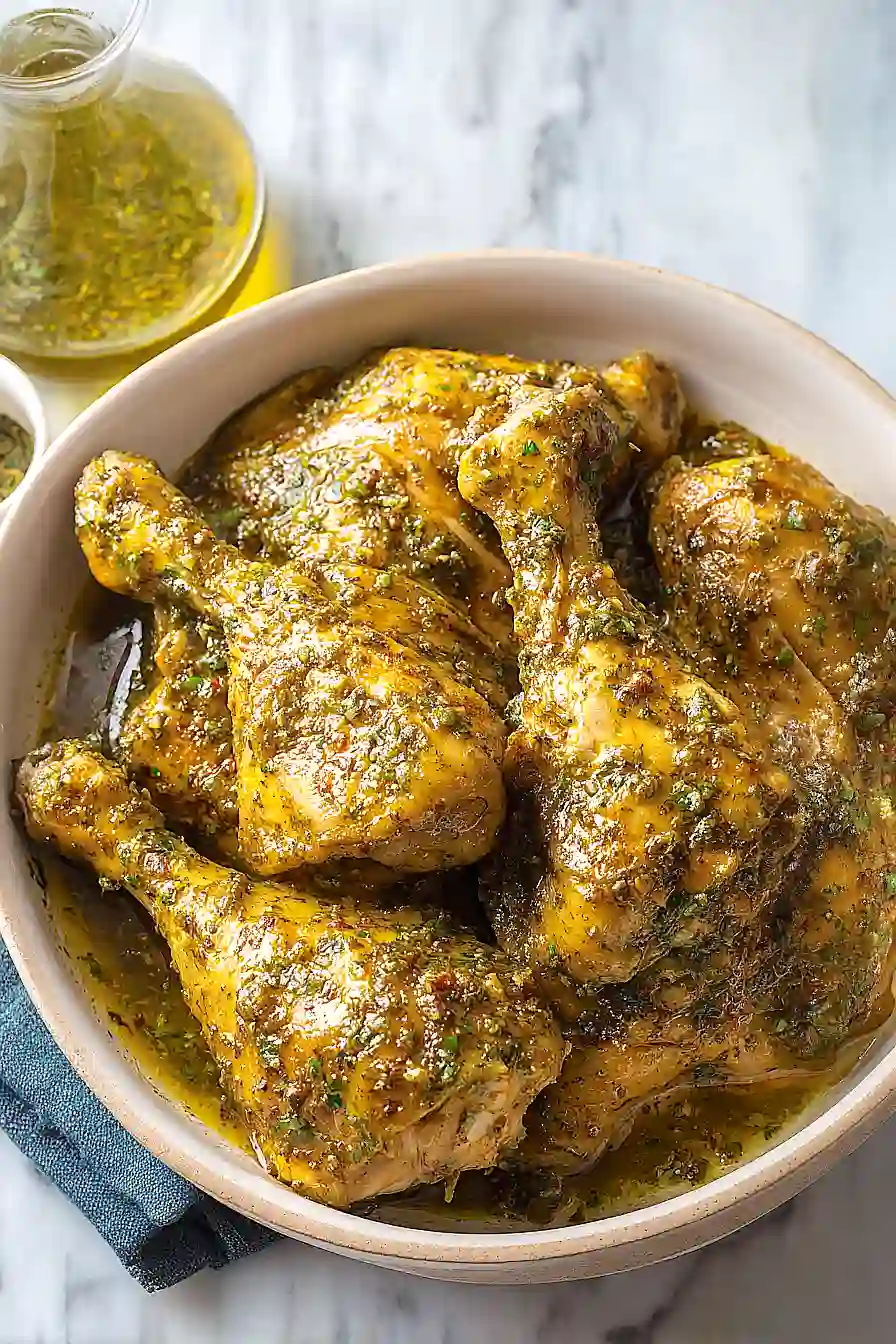
I’ve been making this jerk chicken marinade for years, and I’m telling you, the combination of fresh thyme and warm allspice is what makes it taste like the real deal you’d find in Jamaica. It’s got the perfect balance of heat, sweetness, and those incredible island flavors that’ll have everyone asking for seconds. Trust me, once you try homemade jerk marinade, you’ll never go back to store-bought!
| Preparation Time | 10-15 minutes |
| Cooking Time | Variable |
| Total Time | 70-755055 minutes |
| Level of Difficulty | Easy |
| Servings | 1.5 cups of marinade |
Estimated Nutrition
Estimated nutrition for the whole recipe (without optional ingredients):
- Calories: 650-750
- Protein: 3-5 g
- Fat: 60-70 g
- Carbohydrates: 35-45 g
Ingredients
- 1/3 cup olive oil
- 1/4 cup freshly squeezed lime juice
- 1/4 cup soy sauce
- 5 scallions, roughly chopped
- 1 1/2 tablespoons fresh thyme
- 1 tablespoon minced garlic
- 2 1/2 teaspoons grated fresh ginger
- 1 tablespoon brown sugar poured tightly
- 1 teaspoon dark molasses
- 1 scotch bonnet pepper, seeds removed
- 1 teaspoon freshly ground black pepper
- 3/4 teaspoon kosher salt
- 1 1/2 teaspoons ground allspice
- 1/2 teaspoon ground nutmeg
- 1 tsp ground cinnamon
Step 1: Prepare the Marinade Base
- 1/3 cup olive oil
- 1/4 cup freshly squeezed lime juice
- 1/4 cup soy sauce
- 1 tablespoon brown sugar
- 1 teaspoon dark molasses
Combine the olive oil, lime juice, and soy sauce in a blender—these liquid ingredients form the foundation of your marinade and help distribute flavors evenly.
Add the brown sugar and molasses, which provide sweetness and depth that balances the heat and acidity.
These wet ingredients should be blended first to create a smooth base before adding the remaining components.
Step 2: Build the Aromatic and Spice Layers
- marinade base from Step 1
- 5 scallions, roughly chopped
- 1 1/2 tablespoons fresh thyme
- 1 tablespoon minced garlic
- 2 1/2 teaspoons grated fresh ginger
- 1 scotch bonnet pepper, seeds removed
Add the scallions, fresh thyme, garlic, ginger, and scotch bonnet pepper (with seeds removed for moderate heat) to the blender with the liquid base from Step 1.
These aromatics and the pepper are best blended while the liquid is already moving, which ensures they're finely incorporated and evenly distributed throughout the marinade.
The heat from the pepper will be tempered by the moisture and oils, creating a complex flavor profile rather than a one-note burn.
Step 3: Finish with Dry Spices and Blend Until Smooth
- aromatic mixture from Step 2
- 1 teaspoon freshly ground black pepper
- 3/4 teaspoon kosher salt
- 1 1/2 teaspoons ground allspice
- 1/2 teaspoon ground nutmeg
- 1 teaspoon ground cinnamon
Add the black pepper, kosher salt, allspice, nutmeg, and cinnamon to the blender and blend the entire mixture until completely smooth.
I like to blend for a full minute or two to ensure all the spices are fully incorporated and the texture is uniform—this helps the marinade cling better to the chicken and ensures every bite has balanced seasoning.
The final marinade should have no visible chunks and flow easily.
Step 4: Marinate the Chicken
- jerk marinade from Step 3
- 3 pounds chicken
Place 3 pounds of chicken pieces in a large bowl or resealable bag and pour the jerk marinade from Step 3 over it, ensuring all pieces are well coated.
Cover or seal and refrigerate for at least 1 hour, though 4 to 12 hours is ideal for deeper flavor development.
I always rotate the chicken or massage the bag halfway through marinating to ensure even coverage on all sides.
Step 5: Cook and Serve
- marinated chicken from Step 4
Remove the marinated chicken from the refrigerator about 15 minutes before cooking to bring it closer to room temperature.
Grill over medium-high heat (around 375–400°F) for 6–8 minutes per side depending on thickness, or bake at 400°F for 25–35 minutes until the internal temperature reaches 165°F.
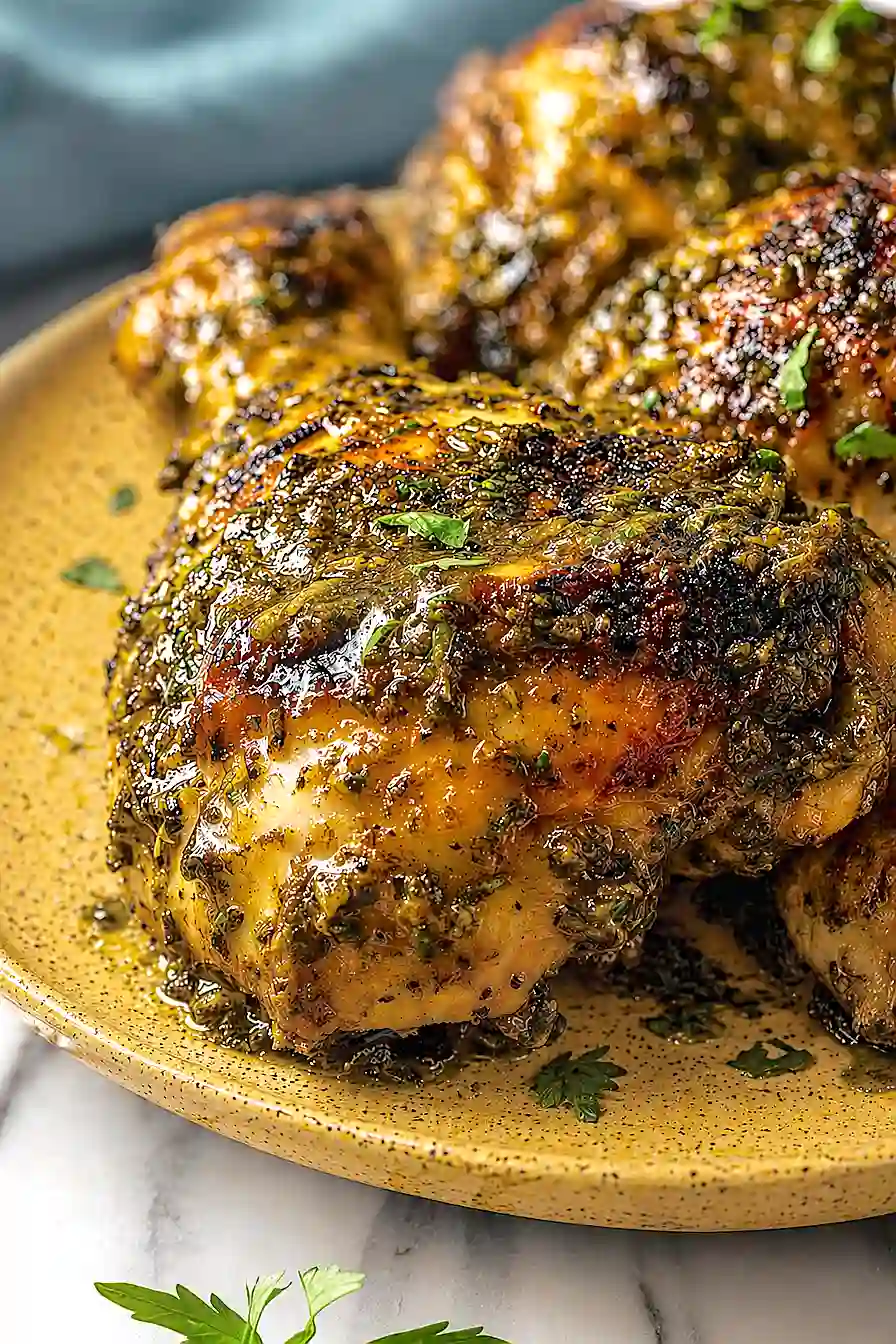
Let the chicken rest for 5 minutes after cooking to retain its juices, then serve hot with rice, beans, or fresh salads.
Classic Jerk Chicken Marinade
Ingredients
Method
- Combine the olive oil, lime juice, and soy sauce in a blender—these liquid ingredients form the foundation of your marinade and help distribute flavors evenly. Add the brown sugar and molasses, which provide sweetness and depth that balances the heat and acidity. These wet ingredients should be blended first to create a smooth base before adding the remaining components.
- Add the scallions, fresh thyme, garlic, ginger, and scotch bonnet pepper (with seeds removed for moderate heat) to the blender with the liquid base from Step 1. These aromatics and the pepper are best blended while the liquid is already moving, which ensures they're finely incorporated and evenly distributed throughout the marinade. The heat from the pepper will be tempered by the moisture and oils, creating a complex flavor profile rather than a one-note burn.
- Add the black pepper, kosher salt, allspice, nutmeg, and cinnamon to the blender and blend the entire mixture until completely smooth. I like to blend for a full minute or two to ensure all the spices are fully incorporated and the texture is uniform—this helps the marinade cling better to the chicken and ensures every bite has balanced seasoning. The final marinade should have no visible chunks and flow easily.
- Place 3 pounds of chicken pieces in a large bowl or resealable bag and pour the jerk marinade from Step 3 over it, ensuring all pieces are well coated. Cover or seal and refrigerate for at least 1 hour, though 4 to 12 hours is ideal for deeper flavor development. I always rotate the chicken or massage the bag halfway through marinating to ensure even coverage on all sides.
- Remove the marinated chicken from the refrigerator about 15 minutes before cooking to bring it closer to room temperature. Grill over medium-high heat (around 375–400°F) for 6–8 minutes per side depending on thickness, or bake at 400°F for 25–35 minutes until the internal temperature reaches 165°F. Let the chicken rest for 5 minutes after cooking to retain its juices, then serve hot with rice, beans, or fresh salads.